Water infrastructure is only as reliable as its weakest mechanical component. In municipal water transmission systems, wastewater treatment facilities, pump stations, and industrial pipelines, valves serve as the primary control and isolation mechanism protecting billions of dollars in infrastructure.
When a valve fails, the consequences extend far beyond the component itself. Leaks result in water loss, pressure instability damages pumps, maintenance costs increase, and system reliability is compromised. For engineers and procurement professionals responsible for protecting infrastructure performance, selecting the correct valve is one of the most critical decisions in the entire system design.
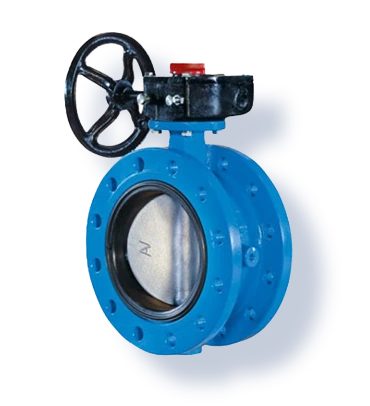
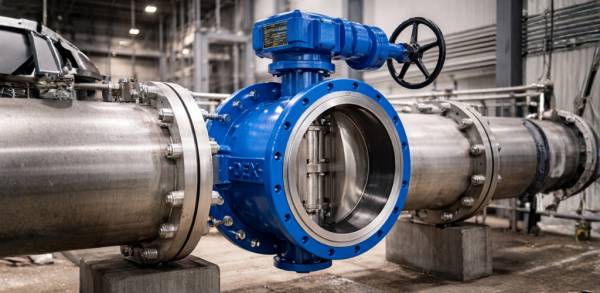
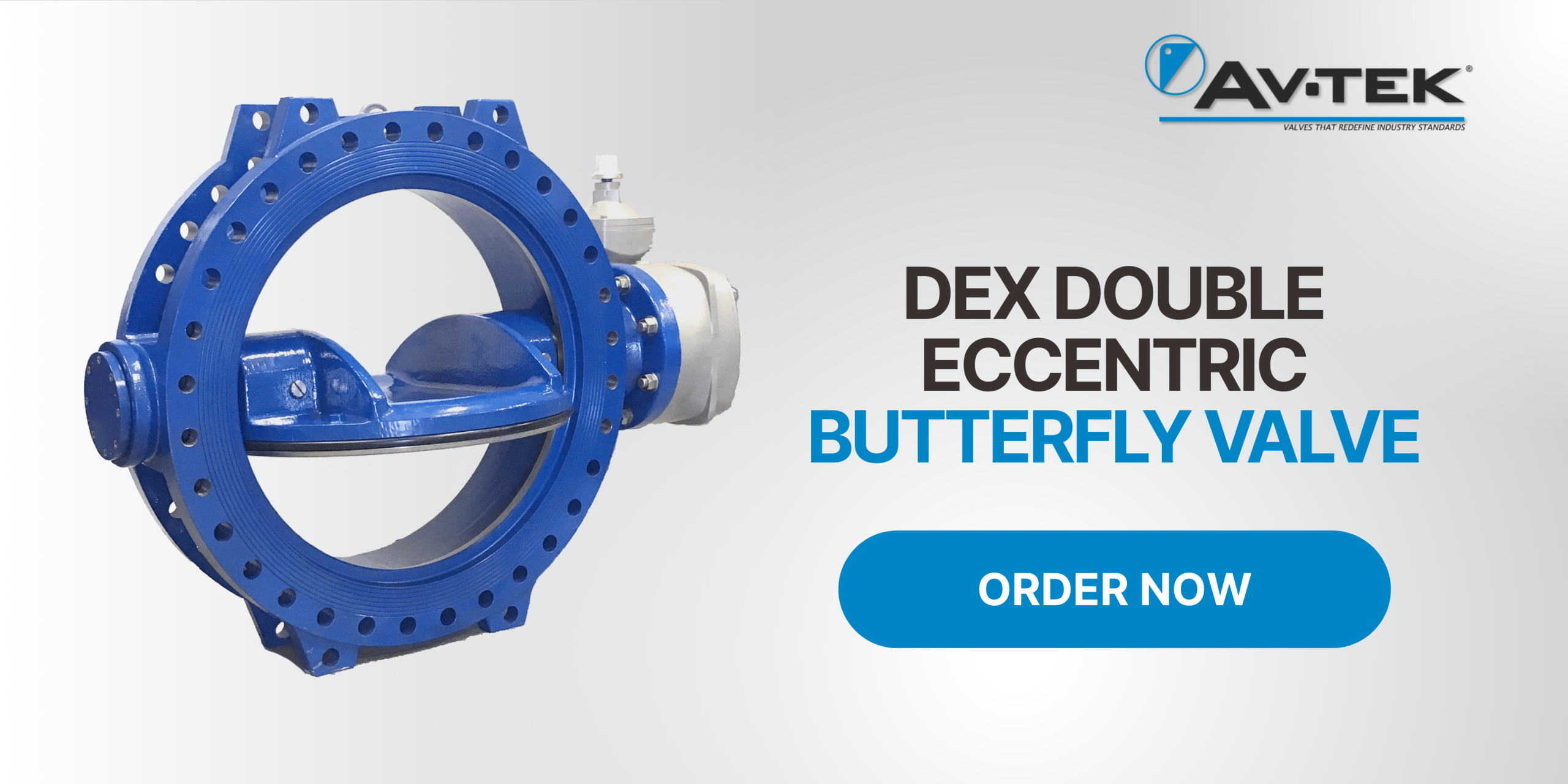
The Av-Tek DEX Double Eccentric Butterfly Valve was engineered to eliminate the weaknesses of traditional butterfly valves and provide long-term, reliable, leak-free performance. Designed to exceed the requirements of AWWA C504 and built with precision engineering, the DEX valve delivers superior sealing, reduced torque requirements, extended service life, and unmatched reliability in municipal and industrial applications.
With nationwide delivery across all U.S. states, the DEX valve is trusted by municipalities, contractors, and engineers who demand infrastructure components capable of performing reliably for decades.
The Engineering Problem with Traditional Butterfly Valves
Traditional concentric butterfly valves operate with the shaft centered in both the valve body and disc. This configuration causes the disc to remain in continuous contact with the seat during operation.
While initially effective, this design introduces several critical weaknesses over time.
Continuous friction between the disc and seat causes wear. This wear gradually reduces sealing effectiveness, allowing leakage to develop. Increased friction also increases torque requirements, placing additional stress on actuators and operators.
As the seat degrades, sealing performance declines further, accelerating valve failure and increasing maintenance frequency.
In municipal infrastructure systems expected to operate reliably for 30 to 50 years, these weaknesses create unacceptable operational risk.
The DEX Double Eccentric Butterfly Valve was specifically engineered to eliminate these failure mechanisms.
How the Double Eccentric Design Solves These Problems
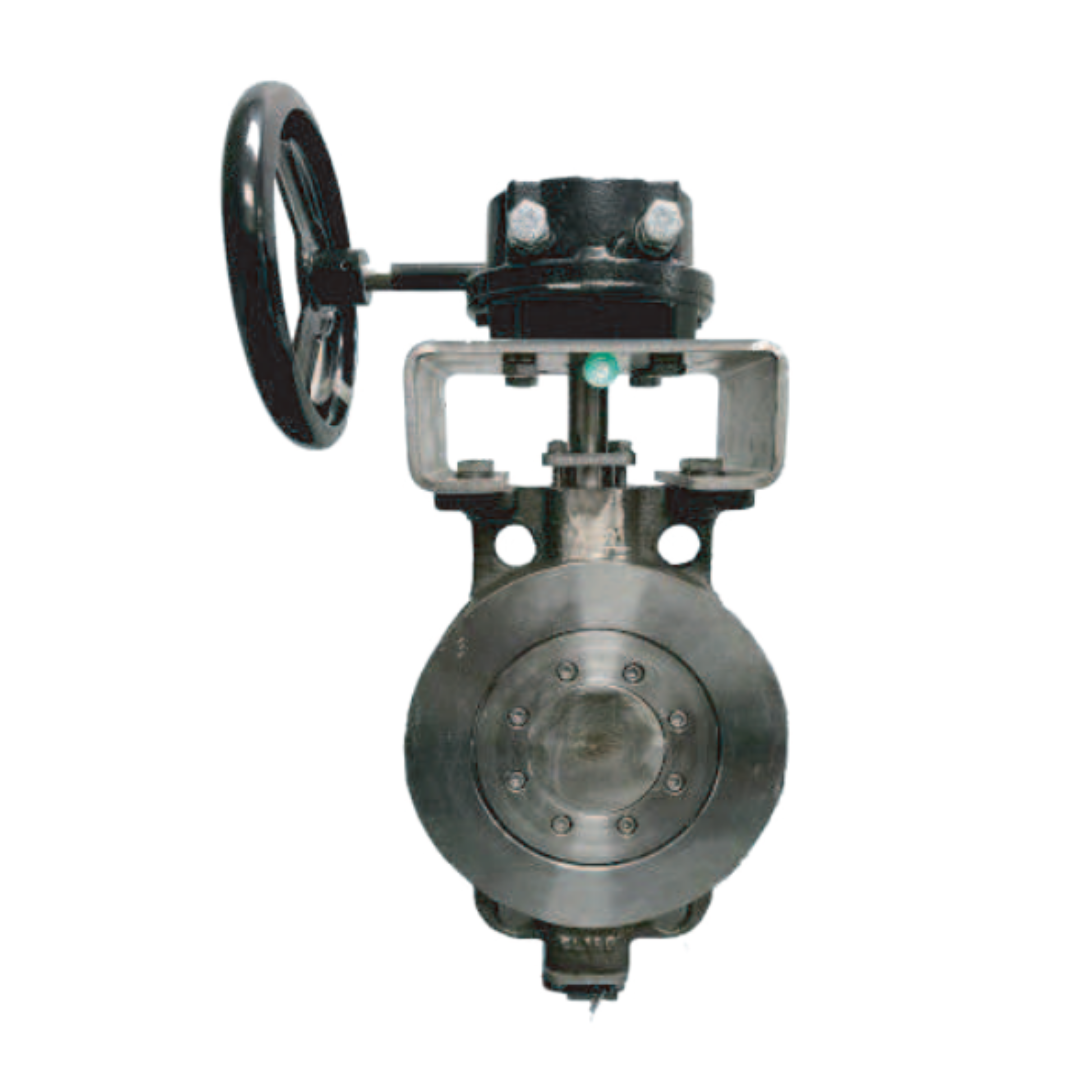
The defining feature of the DEX valve is its double eccentric shaft geometry. The shaft is intentionally offset from both the disc centerline and the pipeline centerline.
This offset geometry creates a cam-like motion during operation.
When the valve begins to open, the disc immediately lifts away from the seat rather than scraping against it. This eliminates friction during most of the operating cycle.
Seat contact occurs only during the final moments of closure, ensuring tight sealing while minimizing wear.
This engineering advancement produces several critical performance benefits.
First, seat wear is dramatically reduced, extending valve lifespan.
Second, torque requirements are significantly lower, improving actuator performance and reducing mechanical stress.
Third, sealing reliability remains consistent over decades of operation.
This design allows the DEX valve to maintain leak-free performance far longer than traditional butterfly valves.
Why Leak-Free Performance Is Critical in Municipal Infrastructure
Municipal water systems transport millions of gallons of water daily. Even small leaks can result in significant water loss, increased treatment costs, and regulatory compliance issues.
Leakage also reduces system pressure stability, compromising water delivery reliability.
The DEX valve’s resilient seating system ensures reliable sealing performance, protecting system pressure and preventing water loss.
This reliability is essential for maintaining infrastructure efficiency and protecting public water resources.
Municipal engineers rely on valves like the DEX because failure is simply not an option.
Reduced Torque Improves Automation and Operational Efficiency
Torque requirements directly impact valve operability and actuator performance.
High torque valves require larger actuators, increasing equipment cost, energy consumption, and mechanical complexity.
The DEX valve’s reduced friction design significantly lowers torque requirements.
This allows for smaller, more efficient actuators, reducing installation costs and improving automation reliability.
Lower torque also improves manual operation, reducing operator effort and improving safety.
As water infrastructure increasingly integrates automation and SCADA systems, low torque performance becomes even more valuable.

Ideal Applications for the DEX Double Eccentric Butterfly Valve
The DEX valve is engineered for critical infrastructure applications requiring reliable flow control and isolation.
Municipal water transmission pipelines benefit from the DEX valve’s sealing reliability and durability.
Wastewater treatment plants rely on DEX valves to isolate process equipment and maintain system control.
Pump stations use DEX valves to regulate flow and protect pumps from pressure fluctuations.
Industrial facilities depend on DEX valves to maintain process stability and equipment protection.
Power plants, irrigation systems, and district cooling networks also utilize DEX valves for reliable flow control.
These applications demand long service life, minimal maintenance, and consistent performance.
The DEX valve delivers on all these requirements.
Corrosion Resistance and Material Durability
Water and wastewater environments expose valves to corrosive conditions that can degrade materials over time.
The DEX valve is constructed using ductile iron for structural strength and coated with fusion bonded epoxy for corrosion protection.
Stainless steel internal components provide additional resistance to corrosion and wear.
These materials ensure reliable performance even in harsh environments.
Corrosion resistance is essential for maintaining long-term valve integrity and preventing premature failure.
Extended Service Life Reduces Lifecycle Cost
Infrastructure investment decisions must consider lifecycle cost, not just initial purchase price.
Valves requiring frequent maintenance or replacement significantly increase operational expenses.
The DEX valve’s reduced wear design extends service life dramatically.
Reduced maintenance requirements lower labor costs and minimize system downtime.
This makes the DEX valve one of the most cost-effective valve solutions over the long term.
For municipalities and infrastructure operators, lifecycle cost efficiency is a major advantage.
Comparison with Alternative Valve Types
Gate valves provide effective isolation but are significantly larger, heavier, and slower to operate.
Ball valves offer reliable sealing but become impractical and expensive at large diameters.
Concentric butterfly valves are compact but suffer from faster seat wear.
The DEX valve combines compact design with superior durability and sealing performance.
This makes it the optimal choice for large diameter infrastructure applications.
Installation and Maintenance Advantages
The DEX valve’s compact design simplifies installation compared to gate valves.
Reduced weight improves handling and installation efficiency.
Lower torque requirements simplify actuator integration.
Minimal maintenance requirements reduce operational burden.
These advantages reduce installation cost and long-term maintenance expense.
Automation Compatibility for Modern Infrastructure
Modern water systems rely heavily on automation to improve efficiency and monitoring capability.
The DEX valve integrates seamlessly with electric and pneumatic actuators.
This allows automated flow control and remote system management.
Automation improves system reliability and operational efficiency.
The DEX valve’s low torque design enhances actuator performance and lifespan.
Nationwide Availability Across All U.S. States
Infrastructure projects require reliable supply chains.
Av-Tek delivers DEX Double Eccentric Butterfly Valves to all U.S. states, ensuring fast delivery for municipal, industrial, and contractor projects.
This nationwide availability ensures project continuity and rapid replacement capability.
Reliable supply chain access is essential for infrastructure reliability.

Upgrade Your Infrastructure with Av-Tek DEX Double Eccentric Butterfly Valves
Request a Quote Today — Fast Delivery Across All U.S. States
Why Engineers and Contractors Choose the Av-Tek DEX Valve
Engineers choose the DEX valve because it solves the most common valve failure mechanisms.
Its double eccentric design eliminates unnecessary friction and extends seat lifespan.
Its durable construction ensures reliable performance in harsh environments.
Its low torque requirements improve automation and reduce equipment costs.
Its leak-free sealing protects infrastructure efficiency.
Its extended service life reduces lifecycle cost.
These advantages make the DEX valve the preferred choice for municipal water systems, wastewater infrastructure, and industrial applications.
The Infrastructure Protection Valve Trusted Across the United States
Water infrastructure represents one of the most critical investments municipalities and industries make.
Protecting that investment requires components engineered for reliability, durability, and performance.
The Av-Tek DEX Double Eccentric Butterfly Valve delivers superior engineering performance, extended service life, and reliable sealing.
Its proven design ensures long-term infrastructure protection and operational efficiency.
For engineers, contractors, and procurement professionals seeking reliable valve solutions, the DEX valve represents the gold standard in butterfly valve technology.